
How Football Has Changed in the Last 5 Years
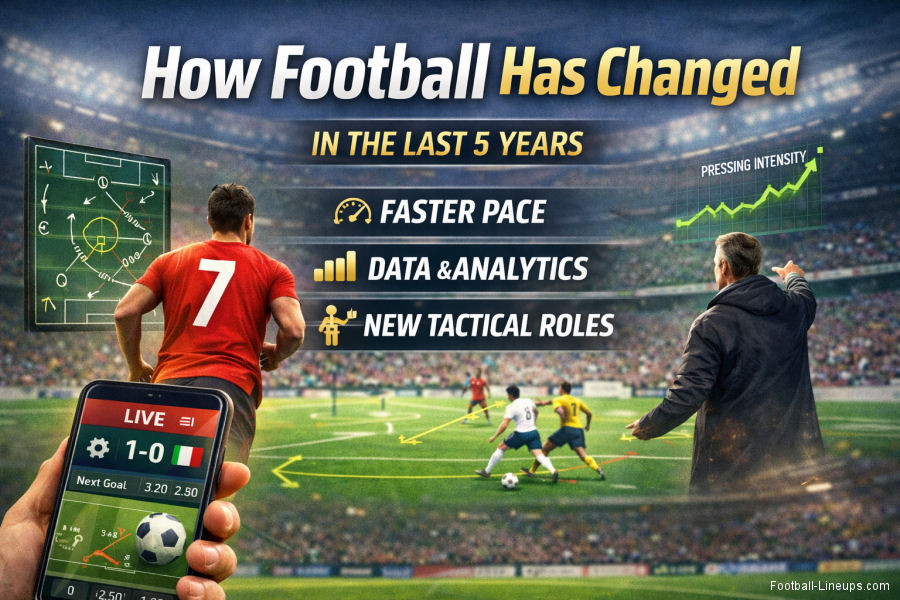
In only five years, football has changed dramatically. The modern game is faster, more structured, and driven by constant decision-making. Coaches demand more actions per minute, players perform multiple tactical roles within a single phase, and fans now follow matches with a second screen full of data, clips, and live reactions.
From the stands, football still looks familiar. But its internal logic has shifted. Space closes faster, possession is more purposeful, and recovery runs are judged almost as harshly as missed chances. The biggest transformation is not a single formation—it is the merging of roles across the pitch.
The Tempo of Modern Football Has Increased
One of the clearest changes in modern football is tempo. Pressing used to come in short bursts; now it often defines entire halves. Teams do not just chase the ball—they anticipate the next pass, the second ball, and the mistake under pressure.
This has made decision-making more important than isolated technical ability. A perfect first touch means little if the next action is delayed. The best teams combine speed with clarity, executing actions under constant pressure.
Transitions have also become more precise. Rather than chaotic counterattacks, top sides now break forward with structure—using spacing, coordinated runs, and clear patterns. The game looks faster, but its best moments are carefully organized.
Football Positions Are No Longer Fixed
Traditional positions have evolved into flexible roles. Full-backs move into midfield, centre-backs initiate attacks, and forwards are expected to defend passing lanes. Midfielders must combine creativity with endurance, acting as both playmakers and pressing engines.
This shift has changed how teams are built:
- Versatility is now as valuable as specialization
- Players must understand multiple tactical functions
- Managers prioritize adaptability in recruitment
The language of football reflects this evolution. Terms like half-spaces, rest defence, and counter-press resistance are now common because traditional labels are no longer sufficient.
The Rise of Data and Tactical Analysis
Data has become central to how football is played and understood. Analysts track pressing intensity, passing networks, and positional structures in real time. Video analysis is constant, shaping both training sessions and match preparation.
Fans are also more informed than ever. Tactical discussions that once belonged only to coaching staff are now part of everyday conversation. Matches are no longer just watched—they are studied.
Second-Screen Viewing and Modern Fan Behavior
The second screen is now part of the football experience. Supporters follow matches while checking statistics, replays, and live updates simultaneously. This has changed how the game is consumed and interpreted.
For many fans, platforms that combine live data, match insights, and real-time interaction feel like a natural extension of the broadcast. Services such as live football betting platforms fit into this ecosystem by offering odds and markets that reflect the same moments viewers are analyzing.
Mobile usage reinforces this trend. Team news, tactical shifts, and match events are processed instantly, and fans expect tools that match that speed. The modern football experience is no longer linear—it is interactive and continuous.
What Has Not Changed in Football
Despite all these changes, the essence of football remains intact. Matches are still decided by timing, composure, and individual quality in key moments. A winger beating his defender, a goalkeeper holding position, or a midfielder attempting a decisive pass still defines outcomes.
Technology and tactics have not replaced the human element. They have only increased the speed at which players must think and act.
Key Details to Watch in the Modern Game
To understand today’s football more clearly, focus on three details during a match:
- Where full-backs position themselves at the start of each phase
- Which player initiates the pressing trigger
- How quickly a team reacts after losing possession
These small patterns often reveal more than possession statistics alone and highlight how deeply the modern game has evolved.
Conclusion
Football has changed more in the last five years than in many decades before. The game is faster, more intelligent, and more demanding for both players and coaches. Roles overlap, decisions happen in seconds, and every phase is shaped by structure as much as instinct.
Yet the core remains the same. Football is still decided by moments of quality, courage, and timing. The difference today is that everything around those moments moves quicker—and understanding the modern game means keeping up with that speed.