
How Starting Lineups Shape Early Match Rhythm in Modern Football
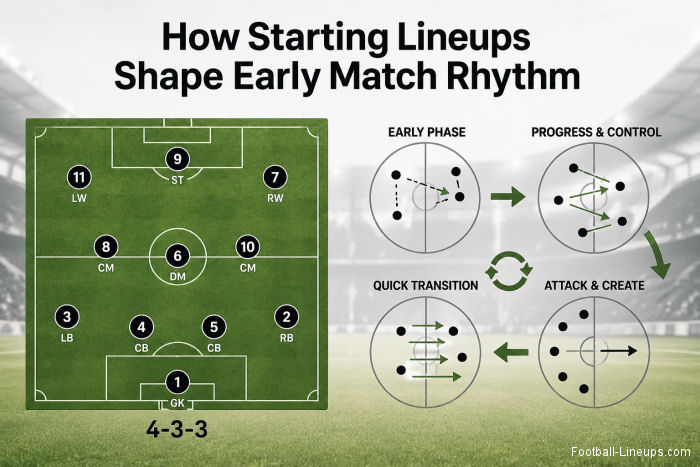
Starting lineups serve as the fundamental blueprint for every tactical encounter in professional football. Managers select the starting eleven to define the team’s initial tactical structure and game plan. This selection influences early match rhythm and contributes to tactical game structure development. Modern coaching involves analyzing player profiles to exploit specific weaknesses in the opposing side.
As the whistle blows, the physical and technical attributes of these players manifest. This shapes early match structure and influences overall game development patterns that emerge. Understanding these selections helps improve predictions of how matches may unfold generally. Starting lineup is an important strategic lever, alongside in-game adjustments and tactical changes.
Tactical Geometry and Positional Flow
Lineup selection influences team spacing and passing structure across the pitch. Choosing inverted wingers instead of traditional wide players significantly changes the offensive rhythm. This decision can increase play through central areas where player density is higher. Alternatively, selecting wing- backs with high stamina allows a team to stretch the pitch. Tools like Metrica Sports allow analysts to visualize these complex positional data points.
These visualizations show how specific player combinations influence the team's overall passing networks. Managers use performance and positional data to align team structure with the intended tactical approach. A well-balanced lineup maintains structural integrity while allowing for creative, fluid attacking movements. Balanced player roles help teams maintain structure while adapting to tactical phases of play.
Physical Profiles and Pressing Intensity
The physical capacity of the starting eleven influences the match's defensive intensity. Managers often select high-energy midfielders to implement a sophisticated and aggressive high press. High pressing can induce opponent errors and disrupt passing rhythm under pressure.
Conversely, experienced players are often used in structured mid-block defensive systems during matches. This choice dictates a reactive rhythm that prioritizes defensive stability over immediate ball recovery. Performance tracking tools like Catapult Vector provide real-time data on player movement.
Coaches monitor these metrics to ensure that the chosen players meet intensity requirements. High- intensity lineups may increase pressure on opponents in the opening stages of matches. Match tempo can increase during high pressing phases in advanced attacking areas.
Because starting lineups often determine match rhythm, analysts studying performance trends—and in broader predictive contexts such as World Cup betting analysis—monitor last-minute squad adjustments as indicators of match dynamics. Selecting appropriate physical profiles supports maintaining tactical performance levels throughout matches.
Professional Momentum and Experience
The inclusion of veteran players in the starting lineup can contribute to team composure during matches. Their presence may help reduce errors and support tactical discipline under pressure. Established, consistent performers can contribute to team stability during the early stages of matches. This focus on proven reliability creates a dynamic and resilient competitive environment.
Psychological assessments can be used by staff to evaluate players' mental readiness for competition. These assessments help inform selection based on mental resilience and performance readiness. A balanced lineup contributes to match momentum through improved structure and performance stability.
Match rhythm can be influenced by player confidence, decision-making, and psychological state.
Strategic selection creates a foundation for both tactical execution and strong mental performance.
Data-Driven Synergies and Substitutions
Modern lineups are often informed by data analysis to improve player combination decisions. Predictive modeling tools like StatsBomb IQ can be used to simulate various match scenarios.
This allows managers to anticipate how their lineup will interact with the opposition's tactics. Match context and player fatigue influence when managers make substitutions. A tiring lineup might require fresh tactical shifts to maintain a high-tempo offensive approach.
Effective substitutions can alter the match rhythm established by the starting eleven. However, the initial selection influences outcomes but is not always the most decisive factor. Data-driven insights support selection decisions to align players with tactical objectives.