
How Two-Legged Champions League Ties Are Decided
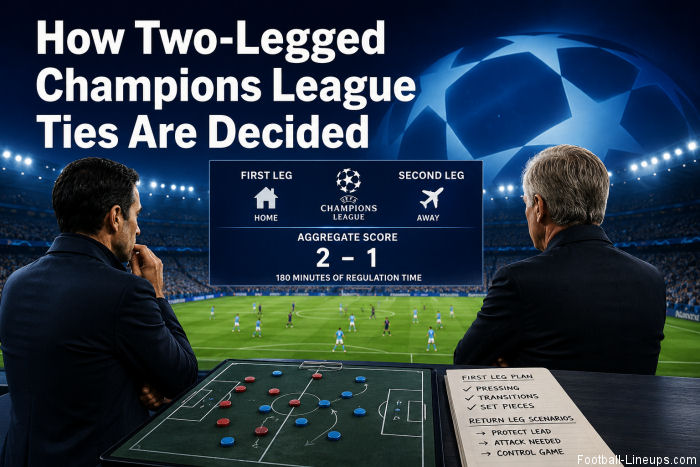
Champions League play-offs are not two separate matches. They are one contest played over two legs, with 180 minutes of regulation time and the aggregate score shaping every decision. Before placing a wager, write down the likely first-leg plan, the venue order and the price available for qualification. Bettors using bet live match markets should also keep the whole tie in view when the first game changes direction. A late goal may transform the second leg more than it changes the first-leg result.
Unlike a normal league fixture, teams must manage the entire tie rather than focus only on one match. A side that plays at home first may approach the opening game differently from a team that has the advantage of hosting the return fixture.
For the 2026/27 Champions League play-offs, first-leg matches are scheduled for 18 and 19 August, with the return legs taking place on 25 and 26 August. Seven winners will progress to the league phase.
Why the First Leg Sets the Tone
The opening match often reveals how both teams view the tie. Some clubs try to create an early advantage through aggressive pressing and attacking football, while others prefer a more controlled approach to avoid conceding an important away goal.
Although the away-goals rule is no longer used in UEFA competitions, the location of each match still influences tactical decisions. A team playing away in the first leg may accept less possession if it believes maintaining a competitive scoreline will create a better opportunity in the return match.
The first leg usually answers several important questions:
- Which team controls possession?
- How high is the defensive line?
- Are full-backs encouraged to attack?
- Which players create the biggest problems?
- Does either side look comfortable protecting a result?
How the Aggregate Score Changes the Second Leg
The second match begins with a completely different tactical situation. The aggregate score determines which team needs to take more risks and which team can focus on controlling space.
A team trailing by one goal usually needs to increase attacking pressure, but that does not always mean an immediate all-out attack. Coaches often wait for the right moment to introduce additional attacking players or change the formation.
A narrow lead creates another challenge. The team ahead must balance defensive stability with the need to keep creating threats. Sitting too deep can invite pressure, while excessive attacking can create counter-attacking opportunities for the opponent.
| Tie Situation | Likely Tactical Approach |
|---|---|
| Level after first leg | Both teams can remain patient and avoid unnecessary risks |
| Home team leads narrowly | The opponent may increase attacking pressure during the match |
| Away team leads narrowly | The home side usually needs more possession and attacking width |
| Two-goal advantage | The leading team may focus on controlling space and transitions |
| Equal score late in the tie | Extra time and penalties become possible |
Why Starting Line-Ups Matter
Two-legged matches often depend heavily on team selection. Coaches may change their approach depending on the score, opponent strengths, and physical condition of key players.
A winger who normally attacks aggressively may have a more defensive role when protecting a lead. A midfielder may become more important because of their ability to control possession and slow the pace of the game.
Before analysing a Champions League play-off match, it is important to consider:
- The starting formation and tactical shape
- Players returning from injury
- Defensive partnerships
- The role of full-backs in attack
- The team's pressing strategy
- Potential substitutes who can change the match
Tactical Changes That Can Decide a Tie
Champions League play-offs are often decided by small adjustments. A change from a 4-3-3 formation to a 3-5-2 system can create more attacking options, while replacing a midfielder with an additional forward can completely change the rhythm of a match.
Some of the most important tactical factors include:
Defensive Organisation
Teams that defend well across both legs often progress even without dominating possession. Compact defensive lines and effective transitions can limit opponents who rely heavily on attacking play.Midfield Control
Winning the midfield battle allows teams to control tempo. A side that can keep possession under pressure often reduces the number of dangerous moments created by the opposition.Set Pieces
Corners and free kicks become especially important in tight knockout matches. One successful set-piece routine can change the entire direction of a two-leg tie.Game Management
Experienced teams understand when to slow the match down, when to increase pressure, and when to protect a result. These decisions are often what separates successful Champions League sides from others.The Importance of Reading Match Momentum
The scoreboard does not always show the full story of a Champions League tie. A team behind on aggregate may still be performing well if it is creating quality chances and controlling important areas of the pitch.
Statistics such as possession, shots, pressing intensity, and territory can provide useful context, but they must always be analysed alongside the tactical situation.
For example, a team with fewer shots may still be comfortable if it is protecting a lead and limiting clear opportunities. Another side may dominate possession but struggle to create dangerous chances.
What Makes a Complete Champions League Analysis
The strongest analysis of a two-legged tie combines several elements:
- The aggregate score
- The venue of each match
- Starting line-ups
- Tactical systems
- Player roles
- Recent team form
- Match momentum
Champions League play-offs are not decided by one moment alone. They are shaped by decisions made before kick-off, adjustments during the match, and how teams respond to changing situations.
Every substitution, tactical change, and goal can transform the direction of the tie. Understanding these details provides a clearer view of why some teams progress while others fall short.
Champions League 2026/2027