
The Quiet Revolution of German Football and the Talent Driving It Forward
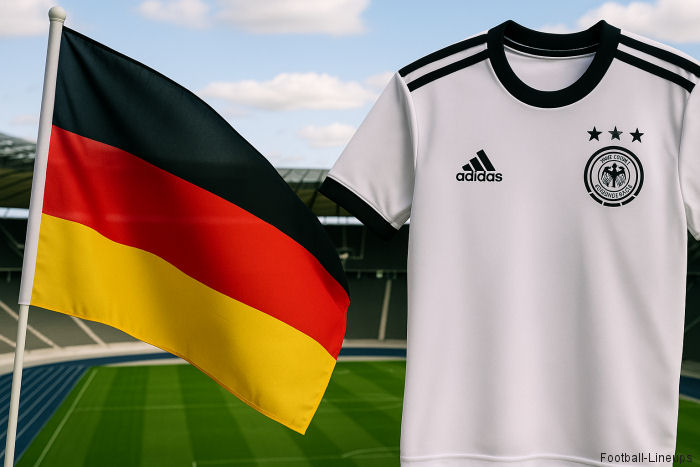
German football is going through one of its most important transitions in years. For a long time, the national team leaned on familiar names, big personalities, and the comfort of established leaders. But the present moment feels different. The country is no longer defined by one or two standout stars. Instead, Germany now has a cluster of highly valuable players spread across positions, age groups, and club situations. Their market values are high, but their influence feels even bigger, because they signal a shift in how Germany wants to play and who it wants to become in the next decade.
Jamal Musiala and Florian Wirtz are usually the first names to surface and for good reason. They sit at the center of this change, both creatively and symbolically. Players like Kai Havertz, Joshua Kimmich, Karim Adeyemi, Aleksandar Pavlović, and Nico Schlotterbeck form a backbone that mixes experience and modern football ideas. Together they represent the strongest core Germany has assembled since the early 2010s.
But what makes this moment truly special is that besides stars who are dominating headlines, there is a group of rising German talents, real and already significant, who may soon demand attention and sway the spotlight. They are not simply copying the established names above them. They bring different qualities, different personalities, and different playing profiles that enrich the national pool. Germany isn’t rebuilding anymore. It’s replenishing at full speed.
Jamal Musiala, Bayern’s Unscripted Genius
If there is a player who captures the modern German spirit, it is Jamal Musiala. At around one hundred and forty million euros in value, he’s not only Germany’s most expensive footballer, but he might also be its most expressive. So far Musiala has more than 70 goals in over 200 matches which puts him on the path of getting on the list for the most goals in football history where his fellowman Erwin Helmchen still holds the record of 989 goals in over six hundred matches.
Musiala is a true natural talent for football, where his movements don’t seem to be rehearsed and his dribbling doesn’t follow the traditional German academy method. His decisions come from instincts most players will never have.
At just twenty two, Musiala already influences matches the way seasoned creators do. Bayern leans on him in tight situations because he disrupts structure, bends defenses, and forces teams to react in the moment. Rivals find it impossible to figure out his drifts between lines.
Jamal Musiala is more than a key player. He is the signal that the rigid German game is changing towards more spontaneous play that’s more enjoyable to watch. He represents the creativity Germany spent years searching for after the 2014 generation began to fade. His value is high because his creativity has no boundaries.
Florian Wirtz, Liverpool’s New Pacesetter
Florian Wirtz belongs in the same sentence as Musiala even though his game style is different. Where Musiala dances, Wirtz measures. Where Musiala explodes, Wirtz calculates. Two temperaments that get the job done in different ways. His transfer to Liverpool confirmed what Bundesliga fans had known for years, Wirtz is a special kind of playmaker, someone who sees the pitch a half second earlier than everyone else and grabs the chance while other players are still scrambling on the field.
Liverpool brought him to shape their next era and be part of their changes as a team. Even though his early Premier League months have been a mixed bag of calm adjustment and scattered brilliance, the quality is still there. We can see these flashes of magnificence when he slows the game, threads a pass between two lines, or freezes a defender with a soft touch.
Pairing Musala’s improvisations and Wirtz’s organizing skills on the field might be the beginning of a very different era for the national team. The two players can share the space without interrupting each other’s pace. They are just two minds who understand tempo differently but complement each other beautifully.
Wirtz’s market value is somewhere around 140 million euros, which reflects what he already means to the club and country, and what he still might become.
Kai Havertz, Arsenal’s Transforming Power
Kai Havertz has grown into a footballer who doesn’t fit into neat categories, and that’s precisely what makes him so valuable. At around sixty million euros, he’s not defined by goals, nor assists, nor a single position. Instead, he offers something that modern teams desperately need, tactical adaptability making him valuable in any position, wrapped in technical skills that support improvisation.
At Arsenal, he plays as if he’s learned to read every rival’s next move. Sometimes he drops deep into the field to connect a play. Sometimes he pushes into the box as a late runner. Sometimes he drifts into wide areas to create an extra passing lane. Watching him now, you can see why coaches trust him so easily and why fans are predicting Arsenal on Stake.com as the next EPL champion.
For Germany, Havertz is the player who makes the attackers around him look better. With Musiala and Wirtz providing creativity, Havertz fills whatever gaps appear between midfield and attack. When games become chaotic, he becomes a stabilizing factor. When matches demand a moment of composure, he provides it. His experience in big games adds a steady hand to a team that sometimes leans young.
Karim Adeyemi, Dortmund’s Aerial Force
Karim Adeyemi is a very different kind of German forward, direct, fast, fearless, and always pushing the defensive line backward. His pace is something no coach can teach, which is why his current market value is as high as sixty million euros. Adeyemi changes the tempo of a match the moment he starts running. Dortmund uses him as their vertical pressure point, the player who stretches the pitch and forces defensive units to back off.
Still, Adeyemi has a lot of work in front of him. His game is raw and unpredictable, which can sometimes disrupt the team, but the speed doesn’t always follow the decisions. The play can sometimes look chaotic, but Karim Adeyemi remains one of the biggest talents in Germany.
When the national team becomes too predictable in possession, Adeyemi becomes their release valve. He turns slow matches into open ones by creating chances for other players to score, which makes him one of the most valuable players. Not many footballers are willing to set up the chance for others and back off into the defense. His time is coming and his value will rise if he becomes more consistent, even though his importance is already obvious.
Joshua Kimmich
Every generation has that one player who ties loose ends on the field and organizes the game, and Joshua Kimmich is the one for both Bayern Munich and Germany. His influence and experience are not represented by his current market value of around 40 million euros. Kimmich still reads games faster than most players. He senses danger early, controls tempo, and guides younger teammates with a level of authority that cannot be replaced.
He is the counterweight to Germany’s new wave of attacking improvisation. Musiala and Wirtz bring chaos. Kimmich brings order. His positional discipline allows others to roam. His passing rhythm keeps the team balanced. At 30 years of age Kimmich remains the key factor in the national team and the backbone of tactics that can keep younger players in line.
Aleksandar Pavlovic, Bayern’s Midfield Anchor
Aleksandar Pavlovic is becoming one of the most valuable German midfielders with a valuation around fifty million euros. His main virtue is staying calm under pressure and thinking thoroughly about the next pass. There’s no rush in his game. Every move is carefully planned regardless of the chaos of a midfield battle.
In Bayern, Pavlovic is mainly used as the stabilizing factor, taking care of the midfield while the attackers are pushing forward. In the national team he remains the balance between Musala and Wirtz, and any other striker that might jeopardize the balance of the team. Pavlovic is only 21 years old but his play reminds of the old school German football led by discipline, power and strict rules. If he continues to develop at this pace, he might become one of Germany’s most important players.
Nico Schlotterbeck
Strong enough to win duels, quick enough to defend space, and confident enough to build attacks from the back, Nico Schlotterbeck is quickly becoming the most valuable player on the national team. In his current club Dortmund, Nico has been part of the defense tactics. In the national team, Schlotterbeck offers reliability and consistency, something that Germany has been lacking for years.
His next step is refining his timing and improving his decision making skills in difficult situations, which is something that could be resolved with experience.
The Rising German Talents Who Could Soon Join Them
The headline stars form the foundation, but what truly makes German football feel renewed are real, rising talents who are already gaining serious attention. They aren’t carbon copies of Musiala, Wirtz, or anyone else. They bring their own style, their own rhythm, and their own ideas about the game. And Germany needs exactly that.
Assan Ouedraogo-RB Leipzig’s Tall, Smooth Midfielder
Assan Ouedraogo is one of the most naturally gifted young Germans. Standing tall with effortless strides, he plays as if he has more space than everyone else. Leipzig loves players who break lines, and Ouedraogo fits the bill. He is still adjusting to the physical and tactical demands of senior Bundesliga football, but the potential is undeniable.
Ouedraogo’s main focus remains on his top form while staying away from injuries that could affect his career. If he works on his timing and decision making skills many coaches will be reaching out to him as one of the best midfielders in the league.
Brajan Gruda-Mainz’s Fearless Dribbler
Brajan Gruda is a player Germany hasn’t had in a while: a winger who dribbles not because the system demands it, but because he believes he can beat whoever stands in front of him. Mainz has benefited big time from his courage and confidence that unsettles defenders.
His focus can still sometimes be off, but Gruda has the potential to bring something that Germany didn’t see in a while, unpredictability that’s capable of leading the game and confusing the rivals.
Maximilian Beier
Maximilian Beier didn’t make it to the front pages just yet, but his sense of timing and scoring results paint the picture of the future football superstar. He also remains calm in crucial moments which is the key to scoring goals.
Beier may never be the flashiest striker, but he could become the one Germany turns to when they need a direct, mobile, goalscoring threat that’s able to keep the balance and the focus of the whole team.
Noah Atubolu
Noah Atubolu is in the center of Germany’s young and talented goalkeepers. What sets him apart from others is the focus and original ideas on how to organize the play from the back. He’s also great under pressure when the action is just meters from the goal. Goalkeepers develop later than outfield players, but Atubolu already shows signs that he could eventually challenge for the national team.
Tom Bischof
Tom Bischof is a technical midfielder with a smooth left foot and a natural feel for combination play. Hoffenheim uses him in roles that require intelligence more than power, and he has started adapting well to the pace of senior football. He is not dominant in matches just yet, but there’s visible talent that could make him one of Germany’s most promising young players.
Why Does This Wave of New Talents Feel Different?
Germany’s current rising generation share something rarely seen in football leagues, variety. Not the forced variety of past rebuilding phases, but genuine contrast, which gives Germany something the national team hasn’t had for years: the ability to change a match through multiple styles. They can slow the game, speed it up, stretch it wide, or attack through the center. They can build slowly or break quickly. They can hold the ball or hit space. New players are bound to forever change how the game is played.
German Bundesliga