
How Football Data and Digital Platforms Are Changing the Fan Experience
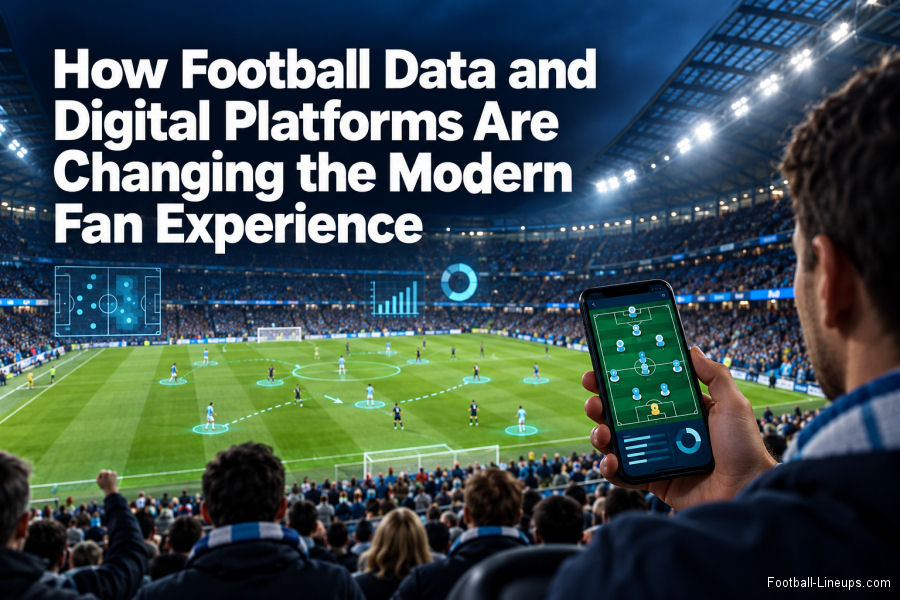
Football has always been driven by emotion, rivalry, and unforgettable moments. Yet the way supporters experience the sport has changed dramatically. Watching a match is no longer limited to following the score or celebrating goals. Fans increasingly examine tactical formations, compare player performances, and participate in digital communities that provide information far beyond traditional television coverage.
The growth of football analytics, mobile applications, and streaming technology has created a more interactive environment. Supporters can access starting lineups, historical results, expected goals statistics, and detailed performance reports within seconds. Information once reserved for professional analysts is now available to almost anyone with an internet connection.
This transformation is influencing clubs, broadcasters, technology companies, and football audiences worldwide. Understanding how these developments interact reveals why digital engagement has become an essential part of the modern football industry.
The Expansion of Football Entertainment Beyond Matchday
Football engagement no longer begins at kickoff or ends with the final whistle. Digital platforms allow supporters to follow transfer negotiations, injury updates, tactical discussions, and training developments throughout the week.
The growing connection between sport and digital entertainment has also expanded the commercial environment surrounding football. Fans frequently move between sports news, interactive applications, gaming services, and other online activities. Within this broader landscape, comparison resources covering the best online casinos illustrate how digital entertainment categories compete for audience attention, although gambling services operate under distinct legal requirements and involve financial risks.
For football organizations, this environment creates opportunities to maintain relationships with supporters between fixtures. Clubs increasingly publish behind-the-scenes videos, interviews, training footage, and exclusive digital content.
However, maintaining engagement requires more than increasing publication frequency. Audiences expect accurate information, meaningful analysis, and content that improves their understanding of the game.
Digital football coverage is therefore evolving from simple reporting toward a continuous information service that connects supporters with their favorite teams.
Why Football Lineup Analysis Has Become Essential
Starting lineups have always generated discussion among supporters, but modern analytical tools have made those conversations considerably more detailed.
Fans can now examine formations, positional adjustments, substitutions, and individual player responsibilities. A traditional 4-3-3 formation, for example, may become a 3-2-5 attacking structure when a full-back moves into midfield.
Understanding these tactical changes helps explain why teams dominate possession, struggle defensively, or create opportunities against particular opponents.
| Football Data Category | Information Provided | Value for Supporters |
|---|---|---|
| Starting lineups | Selected players and initial positions | Understanding tactical intentions |
| Historical formations | Previous team structures | Identifying tactical patterns |
| Substitution records | Changes during matches | Evaluating coaching decisions |
| Player appearances | Participation across competitions | Tracking consistency and availability |
| Match statistics | Possession, shots, passes, and other indicators | Comparing team performances |
Platforms specializing in historical lineups and match information make it easier to compare tactical decisions across seasons.
For instance, supporters studying a team's defensive problems can examine whether recurring weaknesses coincide with changes in personnel, formation, or midfield structure.
Nevertheless, formation diagrams should not be interpreted as complete tactical explanations. Player movement, pressing intensity, and opposition behavior can substantially alter how a team operates during a match.
Advanced Statistics Are Changing Football Discussions
Traditional football statistics focused heavily on goals, assists, shots, and possession. Although these indicators remain useful, modern analysis increasingly incorporates measurements designed to provide additional context.
Expected goals, commonly abbreviated as xG, estimates the probability that a particular scoring opportunity will result in a goal. Other models examine passing progression, defensive actions, territorial control, and the quality of opportunities created.
These metrics can help distinguish between a team producing consistently dangerous chances and one benefiting from unusually effective finishing.
Several analytical concepts have become particularly relevant:
- Expected goals (xG): Estimates the quality of scoring opportunities based on historical shot characteristics.
- Expected assists (xA): Evaluates the likelihood that passes leading to shots will produce goals.
- Progressive passes: Identify passes that significantly advance the ball toward the opposition's goal.
- Pressing indicators: Help assess how frequently teams attempt to disrupt opposition possession.
- Field tilt: Measures territorial dominance using possession or passing activity in attacking areas.
These measurements provide additional perspectives rather than definitive judgments.
A team with a higher xG total does not necessarily deserve victory in every match, and individual statistics can be influenced by tactical responsibilities.
The greatest value comes from combining quantitative information with direct observation.
Streaming Technology Is Reshaping Football Broadcasting

Football broadcasting has entered a period of substantial technological change. Traditional television remains important, particularly for major international competitions, but streaming platforms have introduced alternative distribution models.
Supporters increasingly expect flexible viewing options, access across multiple devices, and additional information during live broadcasts.
Some digital services provide interactive timelines, player statistics, alternative commentary, and condensed match highlights.
| Broadcasting Model | Main Characteristics | Potential Limitations |
|---|---|---|
| Traditional television | Established production and scheduled coverage | Limited viewing flexibility |
| Subscription streaming | On-demand access and device compatibility | Multiple subscriptions may be required |
| Club-owned platforms | Exclusive interviews and behind-the-scenes content | Limited access to live competition rights |
| Social media highlights | Short-form content and rapid distribution | Restricted match footage availability |
| Interactive match centers | Live statistics and event tracking | Dependence on accurate data feeds |
Broadcasting rights remain a major economic factor. Football leagues must balance commercial revenue with accessibility, particularly when supporters need several subscriptions to follow different competitions.
For smaller leagues and emerging football markets, digital distribution may provide opportunities to reach international audiences without relying entirely on conventional broadcasting agreements.
Social Media Has Created a New Generation of Football Analysts
Social media has transformed how tactical opinions and football information circulate.
Independent analysts, journalists, former players, and content creators can publish detailed breakdowns without requiring access to traditional broadcasting networks.
Short videos explaining pressing structures, defensive transitions, or attacking combinations have become popular among supporters seeking deeper tactical knowledge.
This development has encouraged a more analytical football culture, but it has also introduced challenges involving misinformation and oversimplified conclusions.
A short video may highlight an individual defensive mistake without showing the tactical sequence that created the situation.
Supporters evaluating football analysis should consider several factors:
- Whether the argument is supported by match footage or reliable statistical information.
- Whether individual actions are examined within the team's tactical structure.
- Whether the analysis considers opposition quality and match circumstances.
- Whether conclusions distinguish repeated patterns from isolated incidents.
These principles help audiences identify meaningful insights rather than relying exclusively on dramatic commentary.
Clubs also face new communication challenges. Tactical decisions can become subjects of intense public debate within minutes, increasing pressure on coaches and players.
Artificial Intelligence and the Next Stage of Football Analytics
Artificial intelligence is becoming increasingly relevant to football performance analysis.
Machine learning systems can process large datasets, identify recurring patterns, and assist analysts in reviewing match events.
Computer vision technologies can also track player positioning and movement when suitable video data is available.
These applications may improve opposition scouting, recruitment research, and tactical preparation.
For supporters, AI-assisted systems could make complex football information easier to understand through automated summaries, interactive visualizations, and personalized statistical explanations.
However, automated analysis has limitations. Data quality, model assumptions, and incomplete tactical context can produce misleading interpretations.
Professional analysts therefore remain essential for evaluating whether statistical patterns reflect meaningful football behavior.
The most promising approach combines computational tools with human expertise rather than treating automated predictions as unquestionable conclusions.
What Digital Transformation Means for Football's Future
Football's digital evolution presents opportunities for clubs, supporters, and technology providers, but it also raises questions about accessibility and information quality.
Advanced statistics and interactive services can deepen engagement, while fragmented broadcasting arrangements may make following competitions more expensive.
Smaller clubs could benefit from affordable analytical tools and direct communication channels, potentially narrowing some of the informational advantages traditionally enjoyed by larger organizations.
At the same time, supporters will need stronger digital literacy to interpret increasingly sophisticated performance data.
The future football experience is likely to combine live action, personalized information, tactical analysis, and interactive media within connected digital environments.
Yet technology cannot replace the uncertainty and emotional intensity that make football compelling. Statistics may explain how a chance developed, but they cannot reproduce the feeling of a decisive goal.
The strongest digital platforms will be those that enhance the sporting experience without distracting from it. As football continues evolving, the combination of reliable information, accessible technology, and authentic supporter engagement will determine how successfully the sport adapts to its increasingly connected audience.