
Why the Formation Is Only the Starting Point
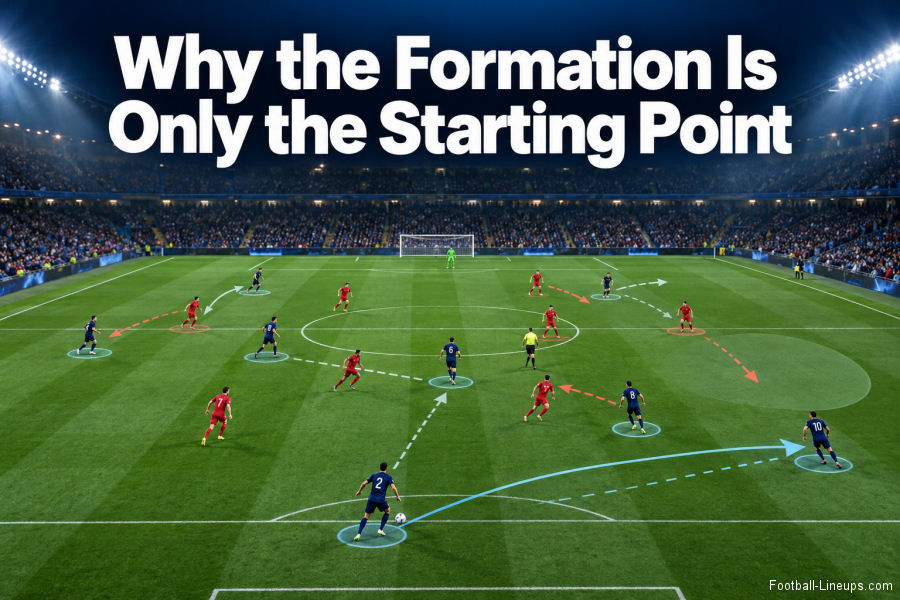
The return to club football in October puts team selection back at the centre of the discussion. A familiar formation on the screen can suggest continuity after international duty. On the pitch, a different player in one position may change how the entire side advances the ball.
That makes this a useful moment to separate three things: the names selected, the positions assigned to them and the movements they actually make. A line-up provides the first two. Watching the game is necessary to establish the third.
Start with the competition and the opponent
The Football-Lineups tournaments index provides the competition starting point for a comparison. Before putting two performances beside each other, establish which tournament and season each belongs to. A cup selection may reflect different priorities from the league side appearing a few days later.
The opponent matters as much as the competition label. A full-back who remains deep against an aggressive winger may advance much earlier against a narrow defensive block. Recording both appearances as the same position is accurate, but it does not describe the same job.
A useful comparison follows the player through several phases. Where does he stand when his goalkeeper has the ball? Where does he appear once possession reaches midfield? What space must he defend when the attack ends?
Confirm the team before interpreting the shape
Predicted line-ups are hypotheses. They become more useful when they explain the basis for a selection, but they remain different from the official team sheet. The last starting XI is a third category: a record of what happened previously, rather than confirmation of what happens next.
Those labels matter when team information is used alongside football odds. A price viewed before the official selection may reflect expectations that later prove incorrect. In the football section of Betway sports betting, any comparison around the team announcement should use the same fixture and market, with the time of each observation recorded. Otherwise, an apparent reaction to a line- up could be a comparison between different questions or different moments.
Even a confirmed team sheet leaves tactical uncertainty. A midfielder listed centrally may spend the opening possessions close to a touchline. A wide forward may move inside as soon as the ball reaches the final third. The opening exchanges should test the proposed interpretation.
Use the graphic as a question
Two teams can defend in a similar shape and build attacks differently. One may bring a midfielder into the defensive line. Another may move a full-back inside. Both changes can create an extra passing option, but they expose different areas if possession is lost.
The distinction between actions and positions is explored in PlaybookWire’s introduction to sports analytics. It is particularly relevant to line-up analysis: the pass recorded in the data gains meaning from the locations of the available receivers.
For the returning club fixtures, begin with a modest set of observations. Identify the first receiver from defence, the player providing width and the player protecting a turnover. Then check whether those responsibilities change with substitutions or the score.
The formation label remains useful. Its value is in organising the questions to ask, rather than supplying every answer before the ball has moved.