
How Football Knockout Tournaments Decide a Winner
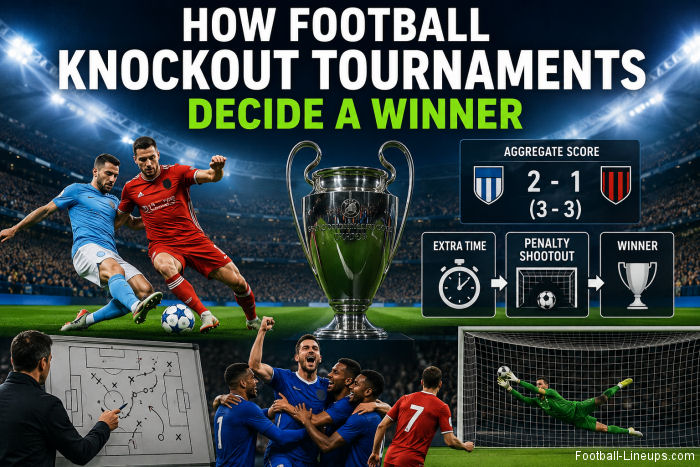
League football gives you room for error. Lose a game in October, and nobody starts planning the funeral. There's another fixture next week, then another after that. A good run of form can erase a bad result pretty quickly.
Knockout football isn't nearly as forgiving.
One lapse in concentration. A clearance that lands at the wrong player's feet. A penalty that misses by inches instead of going in. Suddenly, a season that looked full of promise is over.
That's the magic of cup competitions. They create a different kind of tension.
You don't just watch the score anymore. You're checking the aggregate. Wondering whether the match is heading for extra time. Thinking about who you'd trust to take the fifth penalty if it comes to that. The final few minutes always feel different. Fans aren't only watching the ball anymore—they're doing the maths in their heads. One goal might be enough to send a team through. Or it might not change anything at all.
It's funny how the competition rules barely cross your mind before kick-off, then end up being one of the biggest talking points by full time.
Why Two-Legged Ties Feel Different
Some knockout rounds are settled in one evening. Others take 180 minutes, spread across two matches.
If you've ever wondered why a team can lose the second game and still qualify, this is the reason. Knockout ties like these aren't decided over 90 minutes. The first game doesn't disappear just because the second one has started. If you did enough in that opening match - say a 2-0 win - you can still afford a 1-0 defeat in the return leg and go through anyway.
Easy enough to understand.
What's more interesting is how that changes the football itself.
A team with a lead has no reason to play at full speed for ninety minutes. They'll slow things down, stay organised and wait for chances on the break. Nobody likes chasing a tie. The team that's behind knows time isn't really on its side, so sooner or later it has to open up. That's often when the match becomes chaotic. One attack can change everything, but so can one counterattack.
The Away Goals Rule Is Gone... But Nobody Really Stopped Talking About It
Bring up the away goals rule around football fans and you'll probably get more opinions than you'd expect.
For years, it was simply part of knockout football. If the aggregate score was level after both matches, the team with more away goals went through. Some people loved the extra layer of strategy. Others thought it was a strange way to decide such important ties.
Eventually UEFA decided the rule had outlived its purpose. Travelling isn't the challenge it once was, pitches are more consistent, and playing away from home isn't considered the same disadvantage it used to be. These days, if the aggregate score is level, the match normally carries on into extra time.
That said, the rule still comes up surprisingly often. Watch highlights from an old Champions League tie and sooner or later someone will point out that the outcome would've been completely different under today's regulations. It created plenty of drama, especially when a late goal suddenly changed everything.
These days, most major UEFA competitions no longer use that system.
The thinking was fairly straightforward. Modern travel isn't what it was thirty or forty years ago, and playing away isn't considered the disadvantage it once was. Rather than comparing away goals, tied matches now usually continue into extra time.
Some supporters still miss the old rule. Others are happy to see it gone. Either way, it changed the way knockout football is played.
Understanding the Rules Before You Start
One of the reasons knockout football is so compelling is that the regulations influence every tactical decision. Before a major cup tie, supporters often debate the rules as much as the teams themselves. Will the match go to extra time? Is it settled over one leg or two? How are penalties used to decide the winner? Knowing the answers helps explain why managers and players approach certain moments so differently.
The same principle applies whenever people compare promotional offers online. The headline may look attractive, but the details behind it often matter more. Wagering requirements, expiry dates, cash-out restrictions, and eligible games can all affect the real value of an offer. That's why comparison resources such as CasinosAnalyzer's guide to Richard Casino bonus codes break down the key conditions, helping readers understand what to look for before making a decision.
Whether it's a football tournament or any offer with detailed terms, taking a few minutes to understand the rules first usually leads to better decisions later.
Preparation Wins More Knockout Matches Than Luck
People often say cup football is all about luck. Sometimes it is. More often, though, the difference comes down to preparation.
Managers spend hours planning for situations that may never happen. What if the match goes to extra time? What if a defender is sent off? What if the tie is decided by penalties? Players rehearse those scenarios long before the television cameras arrive, ensuring they're ready if the moment comes.
Supporters prepare in their own way as well. Many take time to understand a tournament's regulations before the knockout rounds begin, avoiding confusion when a tie reaches extra time or a penalty shootout. The same approach applies in other areas where rules and conditions matter. Comparison resources such as CasinosAnalyzer help readers review details like licensing, payment methods, and bonus terms in one place, making it easier to understand what they're signing up for before making a decision.
Extra Time Changes Everything
By the time extra time begins, players have already covered miles.
That's why those extra thirty minutes often look completely different from the first ninety.
Legs get heavier. Defenders react a fraction slower. Fresh substitutes suddenly become the fastest players on the pitch, and one burst of energy can decide the entire tie.
Some of football's greatest knockout goals have arrived when everyone else looked exhausted.
Why Penalty Shootouts Never Get Easier
Penalty shootouts divide opinion every season.
Some people hate seeing months of hard work decided from twelve yards. Others wouldn't change a thing because few moments in sport create that level of pressure.
Five penalties each. Then sudden death if needed.
The format sounds simple until thousands of fans fall silent and one player has to make the longest walk of his career.
Goalkeepers become heroes. Veterans miss. Teenagers step up without blinking. That's exactly why shootouts remain one of football's most unforgettable spectacles.
The Rules Keep Changing
The away goals rule had been around for so long that it almost felt permanent. Then it disappeared. Some people thought that was overdue. Others still miss it, which probably tells you everything about how football fans react to change. Fans will argue. Managers will adapt. Players will keep finding new ways to win.That's football.
Conclusion
Knockout tournaments are compelling because they refuse to forgive mistakes.
Aggregate scoring rewards consistency over two matches. Extra time tests stamina. Penalty shootouts demand nerves that few players truly possess. Even retired rules like away goals still shape how supporters remember classic nights.
Watch the next knockout tie that goes into extra time and you'll start spotting things you probably ignored before. A substitution. A tactical tweak. Even a team taking an extra few seconds over a throw - in suddenly feels important.
And that's exactly why knockout football never gets old.