
Why Starting Elevens Change a Kalshi Football Reading
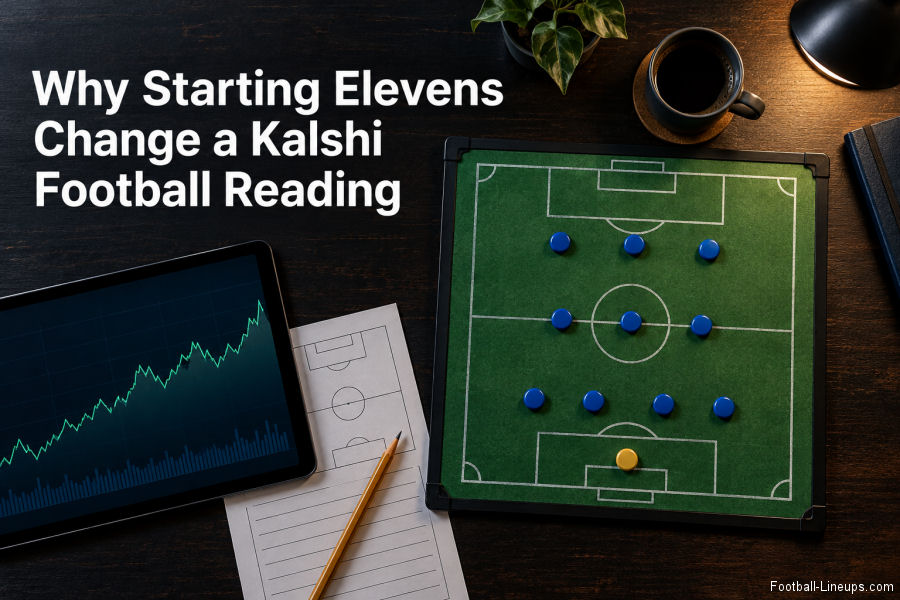
Football gives you plenty to think about before kickoff, but the team sheet has a habit of making a mockery of earlier assumptions. The USMNT offered a good example against Mexico on October 3. Mauricio Pochettino changed seven starters from the side that had faced Chile four days earlier. His new eleven averaged 23 years and 342 days, with only 29 international appearances per starter on average. Cavan Sullivan and Julian Hall each entered with three caps. Goalkeeper Diego Kochen had one. Anyone assessing the match several hours earlier had been working with an incomplete picture.
Team Sheets Can Change the Reading
Prediction-market prices provide more of a fleeting glimpse than a final answer. SportsbookReview explains how Kalshi contracts trade between one cent and 99 cents before resolving at $1 or zero. SBR's Kalshi breakdown also covers liquidity and settlement rules, which helps if you are more familiar with conventional football odds. These are the kinds of important details available elsewhere too. You can see where traders have priced a certain outcome based on a 61-cent contract. But it can't tell you whether the coach is about to make a change by leaving a first-choice midfielder on the bench.
Of course, that USMNT selection in October included more than fresh names. Stalwarts were present on the pitch. Chris Richards partnered Auston Trusty in defence for only the second time. Kochen made his first international start. Tyler Adams captained a side containing several players with limited senior experience. Those details can change how you judge defensive familiarity or build-up play. Reading the eleven as eleven isolated names misses part of the point. Coaches select combinations.
Rankings Tell You About Strength, Not Tonight's XI
Before the October international window, Mexico stood 10th in FIFA's men's ranking. The United States was 16th. That gives you a broad measure of where the two national teams had been performing. FIFA uses an Elo-based system that adjusts points based on results and opponent strength. Not all context is there. A ranking ignores the eleven selected for a particular evening.
The distinction is important because lineup selection has measurable value. A 2026 study in the IIMB Management Review used eight seasons of English Premier League data to model starting-eleven choices. The researchers included individual strength and opponent characteristics, while also considering combinations between teammates. Their approach showed that lineup construction could change estimated win probabilities. In other words, team reputation only goes so far.
Formation Changes the Questions You Should Ask
A formation diagram is useful because one substitution can alter several roles. Adding a central midfielder to the eleven may provide another passing option. Removing a winger may mean the width must come from a full-back. These are tactical questions, not just personnel questions. The key is to check what each selection changes in possession and what it asks of the team when the ball is lost.
Confirmed positions count for more than a predicted lineup published that morning. An ambitious 4-3-3 might look very different when you see which midfielder gets chosen and who starts on the other flank. Football fans do this in their heads without stopping. They see the team sheet and then do the maths. A contract price calculated before that information arrives belongs to an earlier version of the game.
A Squad List Is Not a Starting Eleven
Club football teaches the same lesson. Real Madrid published its squad for the October 10 match against Villarreal the day before. Jude Bellingham appeared alongside Eduardo Camavinga. Kylian Mbappé was listed among the forwards. That told supporters who was available, but not how José Mourinho would line the side up once the starting eleven appeared. Availability limits the options. Selection is more informative.
That distinction counts in a market that has been trading for hours. Early prices take injuries and recent form as given. Traders also have rankings as a guide. Then the official XI appears and removes a large chunk of doubt. A backup goalkeeper taking the field unexpectedly is hard data. A striker getting a rest is too. You don't need to act as if every change to a team sheet deserves a different headline number, but that number is worth another look.
A Contract Price Is Not an Ideal Probability
There's another reason not to see the number on screen as a perfect prediction. Niusha Moshrefi examined 23 million Kalshi moneyline trades across major sports for a 2026 paper on prediction-market pricing. Prices tracked realized probabilities closely for parts of a contract's lifespan. That relationship broke down at or near settlement. The research found that cross-game parlays were priced higher than the combined prices of their legs, and the discrepancy grew as more legs were added.
The paper doesn't say a 60-cent football contract isn't worth anything. It says price needs some context. Time remaining matters. The kind of product does too. Add a confirmed starting eleven and you gain another piece of information that was missing when earlier trades occurred.